API
See also: The API dispatcher (system view) · RQO · SQO
Dédalo speaks one HTTP endpoint. Every client call — the record form, the tree, a tool, the assistant — is a POST of a Request Query Object (RQO) to /api/v1/json, naming a dd_api class and an action. The pair is looked up in a static registry: a pair that is not registered does not exist, and is refused at the first gate. There is no dynamic method lookup and no autoloader fallback.
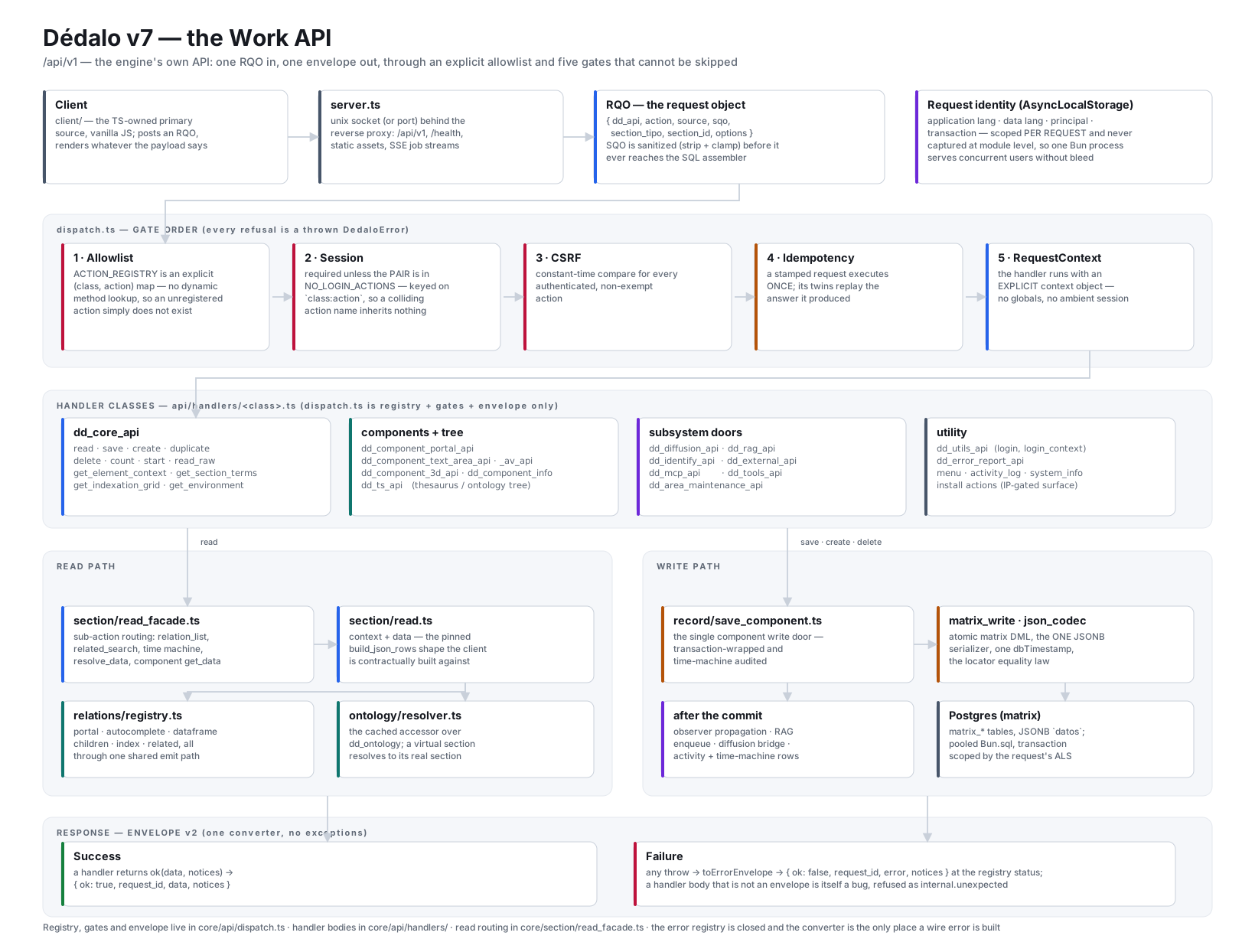
The whole endpoint on one page — click the diagram to open it full size. It is one of the architecture diagrams.
The pages
- JSON API v1 — the entry point, the RQO body, the gate chain (session, CSRF, permissions), the response envelope, and the list of API classes. Start here.
- RQO field mapping — per-action field usage: exactly which RQO keys each registered action reads, and what it ignores.
- Class reference — one page per
dd_apiclass, its actions, their options, return contract and error codes. The dispatch page documents the router itself.
An OpenAPI description of the endpoint ships beside these pages as openapi.yaml in this directory.
Two things worth knowing before the first call
- The registry is the contract.
ACTION_REGISTRYinsrc/core/api/dispatch.tsbinds every callable(dd_api, action)pair to a handler. If it is not there, it is not callable — and it is not documented here. - Every response is envelope v2. A success is
{ ok: true, request_id, data, notices? }; a failure is{ ok: false, request_id, error: { code, category, message, label_key, retryable } }. Readok,dataanderror. A top-levelmsgorerrorsis a handler's own extension key, never the error channel. See the error system.