The journey of one record
Part of Dédalo in plain language · Previous: Where everything lives · Next: Three doors into the same collection
One photograph, one interview, one coin, one folder of correspondence. This is what happens to it, from the day somebody catalogues it to the day a visitor — or an AI assistant — finds it.
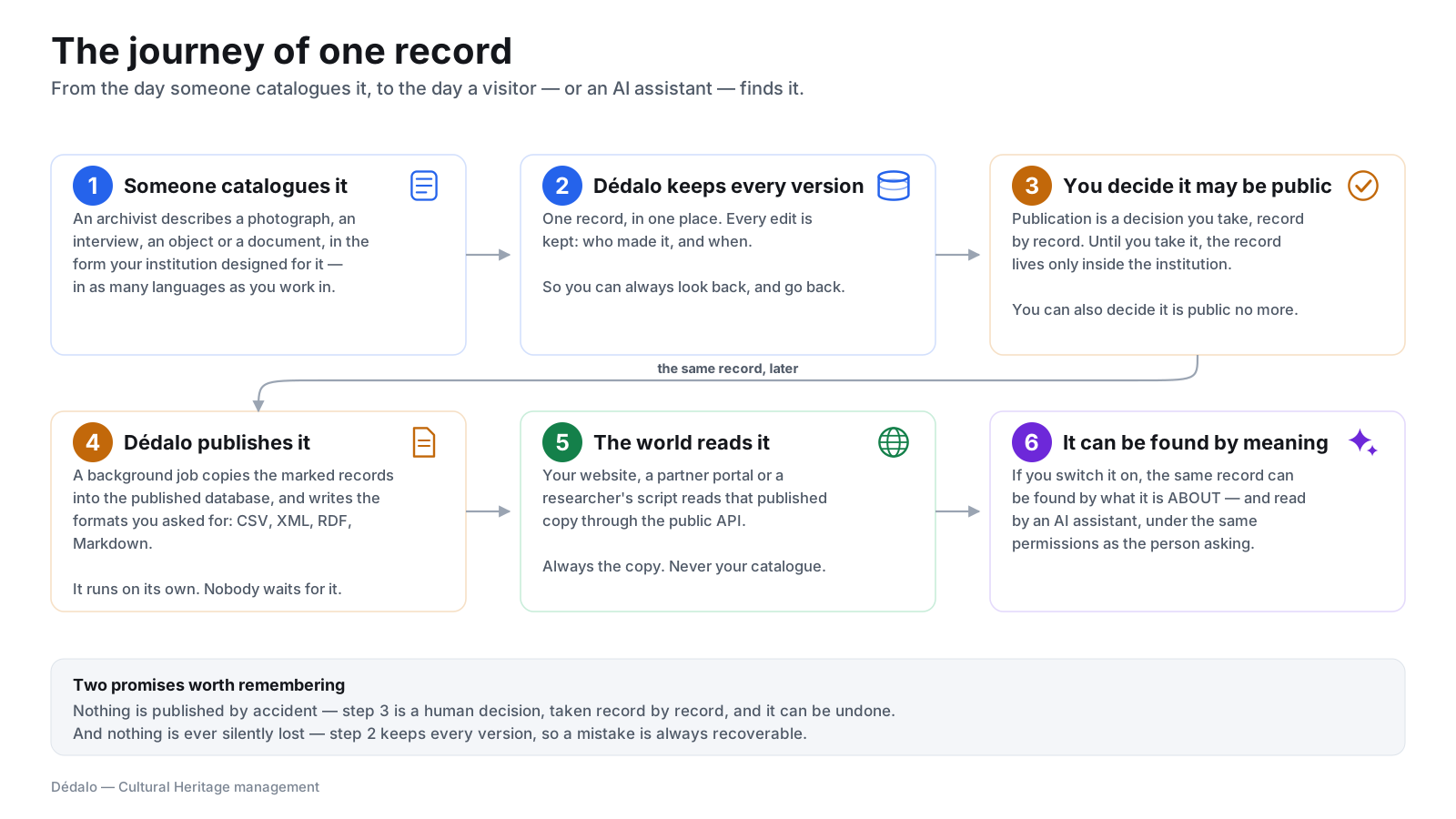
Click the diagram to open it full size.
The six steps
1 · Someone catalogues it. An archivist describes the item in the form your institution designed — not a form the software imposed. Fields, their order, their vocabularies and their languages are yours; see The ideas behind Dédalo.
2 · Dédalo keeps it, and keeps every change. One record, in one place. Every edit is stored with its author and its date, so you can read the history of a record and restore an earlier state. The time machine tool is where you do that.
3 · You decide it may be public. Publication is a decision, taken record by record. Until it is taken, the record exists only inside the institution. Un-marking a record is equally a decision: the next run removes it from the published copy.
4 · Dédalo publishes it. A background job copies the marked records into the published database and writes the file formats you asked for. It runs on its own; nobody has to sit and wait for it, and a run that is interrupted resumes where it stopped rather than starting over.
5 · The world reads it. Your website, a partner portal or a researcher's script reads that published copy through the public service — always the copy, never your catalogue.
6 · And it can be found by meaning. If you switch it on, the same record becomes reachable by what it is about, and readable by an AI assistant under the same permissions as the person asking. See Ready for AI.
The two promises
Nothing is published by accident
Step 3 is a human decision, taken per record, and it is reversible. There is no setting that makes a whole collection public because somebody imported it.
Nothing is silently lost
Step 2 keeps every version. A wrong edit, a bad bulk change or an accidental deletion is recoverable, and the record shows who did what and when.
What this changes for a project
- Cataloguing and publishing are not the same act, and they do not have to happen at the same speed. A collection can be catalogued for years and published in one afternoon.
- Partial publication is normal. A record can be public while some of its fields are not — donor names, sensitive locations, personal data of living people, restricted testimony.
- Reprocessing is cheap. Because the published copy is generated, changing the shape of the output — a new format for an aggregator, a new field, a different vocabulary — means publishing again, not re-entering data.
Where to read more
- Diffusion data flow — deciding what is published, and how it is transformed on the way out.
- Importing data and Exporting data — getting material in and out.
- Tools user guide — the day-to-day toolbox behind steps 1 to 4.